Ancient Greek Language

Ancient Greek structures our thinking

The way a person speaks also determines his way of thinking. Language, the articulate and rational word, organizes the human brain and shapes both the perception and acuity of the mind, as well as the ability to express and communicate.

Language reveals the genealogy, the history, the temperament, the elegance, the soul of each people. In particular, the ancient Greek language, apart from its inexhaustible wealth of words, perfectly organized syntactic structures and diverse and precise grammatical forms, has a logical relationship between the word and the thing that this word names.


«Whoever believes in names, also believes things»

In other words, whoever knows how to interpret words well, knows well the nature of the things that these words name, as Plato says in Cratylus.

Benefits and Teaching Methods

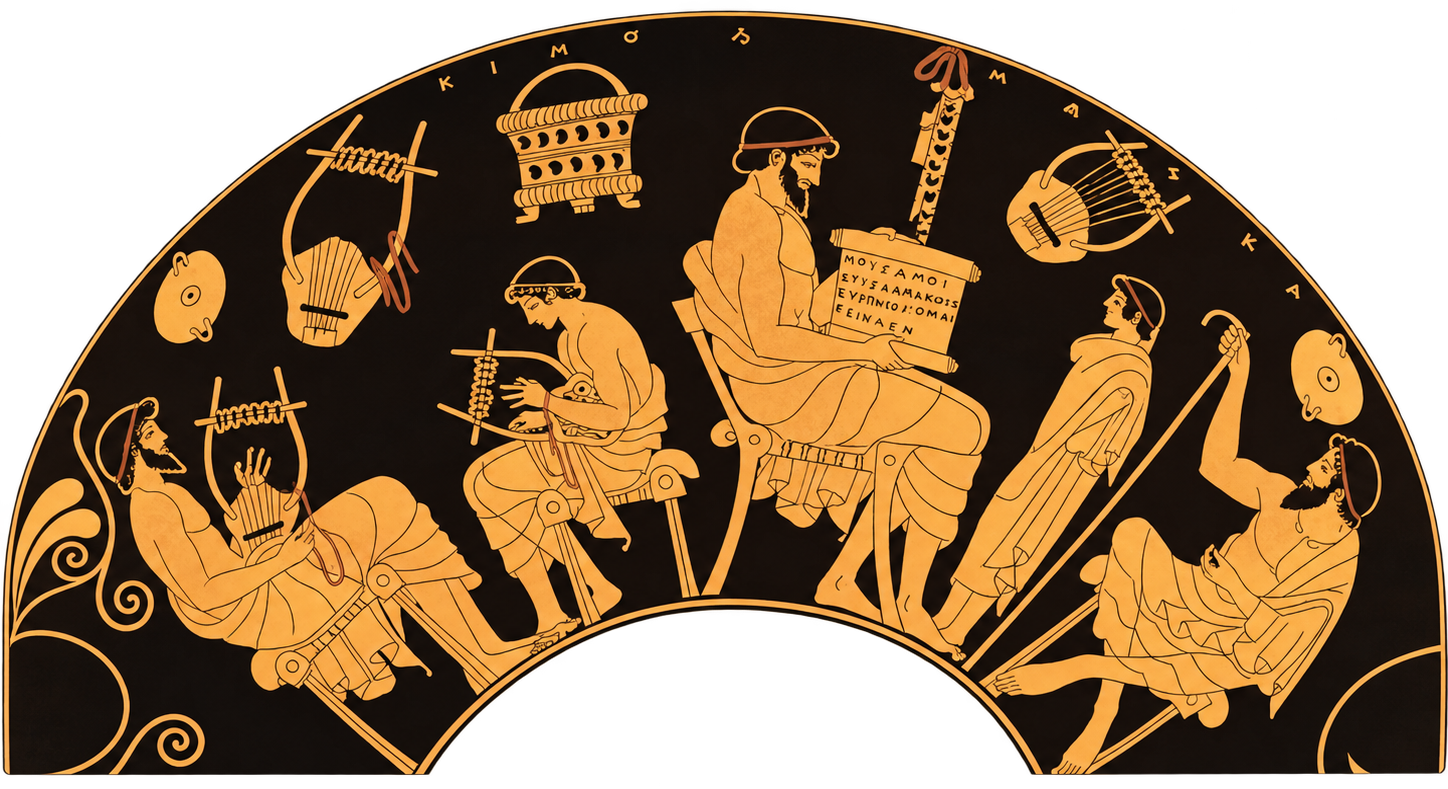
Since, therefore, in the Greek language nothing has a conventional name, the children in Hermeion learn «to find the word that is hidden in the word», «to find the heart of the word as a word» and to «find the family of the word», i.e. to play games of etymology, production, composition, synonyms and opposites, thus being taught to understand the meanings of the Greek language accurately, but also to express themselves with absolute clarity.

The richness, structure, and precision of expression of ancient Greeks are not only They perfect mental abilities, but they help children to understand and use the modern Greek language better, as modern Greek is derived from ancient Greek, but is incomplete and poor compared to it. In the transition to the modern Greek language, many grammatical and syntactic problems arose, which are impossible to understand without the knowledge of ancient Greek. But and learning foreign languages is easier for anyone who knows ancient Greek, As both the vocabulary and the syntax and grammar of most languages are based on ancient Greek.

  • In the lessons, where children are treated as separate personalities and not as a whole of a class, Aesop's fables, excerpts from classical authors, excerpts from Orphic and Homeric texts, word families and a wealth of teaching material are taught.
  • Using optic-visual means, drawings, theatrical play, fruitful dialogues and rich playful methods, children learn without fatigue and additional burden.
  • Students are trained in understanding the ancient Greek language, in memorizing texts in order to cultivate memory, in calligraphy, in the correct recitation and pronunciation of the Greek word, while at the same time through the texts they become acquainted with the necessary syntactic structures and the basic grammatical rules of the language.
  • At the same time, on the occasion of the texts, they reflect, discuss, philosophize, form opinions, get to know historical facts, learn about the life, everyday life, values and culture of the ancient Greeks in general. Everything takes place during lesson, so that the child is not burdened with homework. Of course, there are also rich exercises for anyone who would like to practice more.

Summing Up

Knowledge of the ancient Greek language offers cultivation and sharpening of mental abilities, in-depth understanding and perfect use of Modern Greek, ease in learning foreign languages, friction and familiarity with worldview, history and the culture of the ancient Greeks, as well as the ability to come into direct contact with the treasure trove of knowledge of ancient Greek texts without the mediation of translation, which always alters the authentic meaning. The child acquires the powerful weapon of the tongue that will accompany him forever.
«A terrible weapon of the tongue, the venerable man», Orphic hymn, Hermos.

* The Greek Language *

When I ever depart from this light
I will maneuver upwards
like a murmuring little man.

And if somewhere in between,
In the blue corridors
I will meet angels,
I will speak to them in Greek, because
they don't know languages.

They talk to each other, with music...

«Nikiforos Vrettakos»