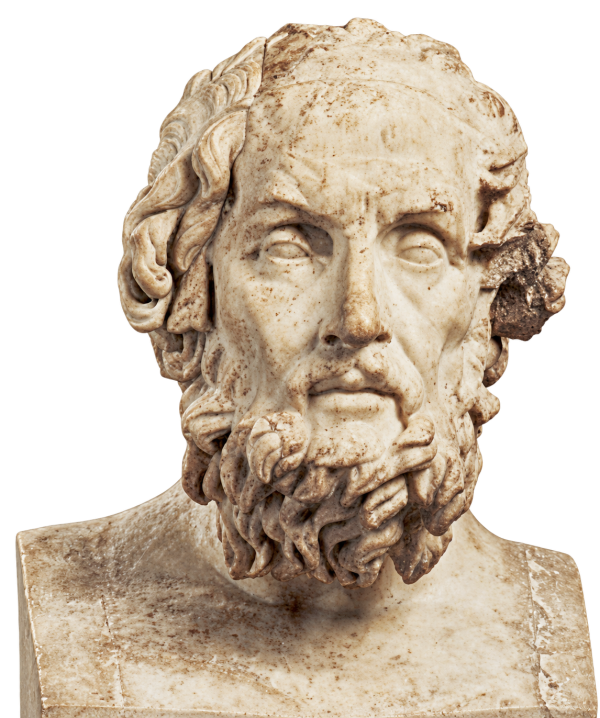
That is why Hermeion teaches children all the texts of the Iliad and the Odyssey, so that they may have the joy of enjoying them enchanted by the plot and action of the wonderful Homeric word, to be transported with their imagination to the Mycenaean kingdoms and live their adventures next to the great heroes. For the teaching of Homer, the modern Greek verse of Iakovos Polylas is used. Iakovos Polylas was a Ionian writer, a fervent supporter of the union of the Ionian Islands with Greece, who belonged to the circle of Dionysios Solomos. When our national poet died, it was Polylas who carefully collected and published his manuscripts. Among his other works, Polylas composed the modern Greek rendering of the Homeric epics, which is characterized by its elegance, its elegance, the poetic nature of its speech and its respect for the Homeric text. In fact, once upon a time, Iliad and Odyssey, translated by Iakovos Polylas, were taught in schools, but now they may be forgotten in a second-hand bookstore.
This excellent text will be taught to children in combination with the original, authentic, Homeric text, from which the most special parts of the epics will be taught. In this way, the opportunity will be given to compare and compare the Homeric with the modern Greek word, so that through lexical and etymological games the similarity and continuity of the two forms of the Greek language can be understood. At the same time, the familiarization of the students with the ancient Homeric language will also be achieved. Taught Homer, children are invited to draw Homer's scenes, to practice reading, memorization, annunciation, and the theatrical representation of both modern Greek and ancient Greek speech. They will, of course, get acquainted with Homer's writing techniques (simile, anachronism, gibbotism, pre-economy, etc.), but above all they will reflect and discuss many issues, such as:
- How do the Homeric people treat strangers?;
- How did the ancient Greeks deal with the gods?;
- Is it the Trojan War, a civil war?;
- Are the Trojans barbarians?;
- What is the ethos of each Homeric hero and what are his ideals?;
- What do the Homeric heroes consider important?;
- What are the consequences of anger?;
- What are the consequences of hubris?;
- Does man decide for his life or does everything be determined by the gods?;
- What are the Mycenaean palaces, the utensils, the furniture, the weapons, the jewelry like?;
- Was there Homer?;
And much more...
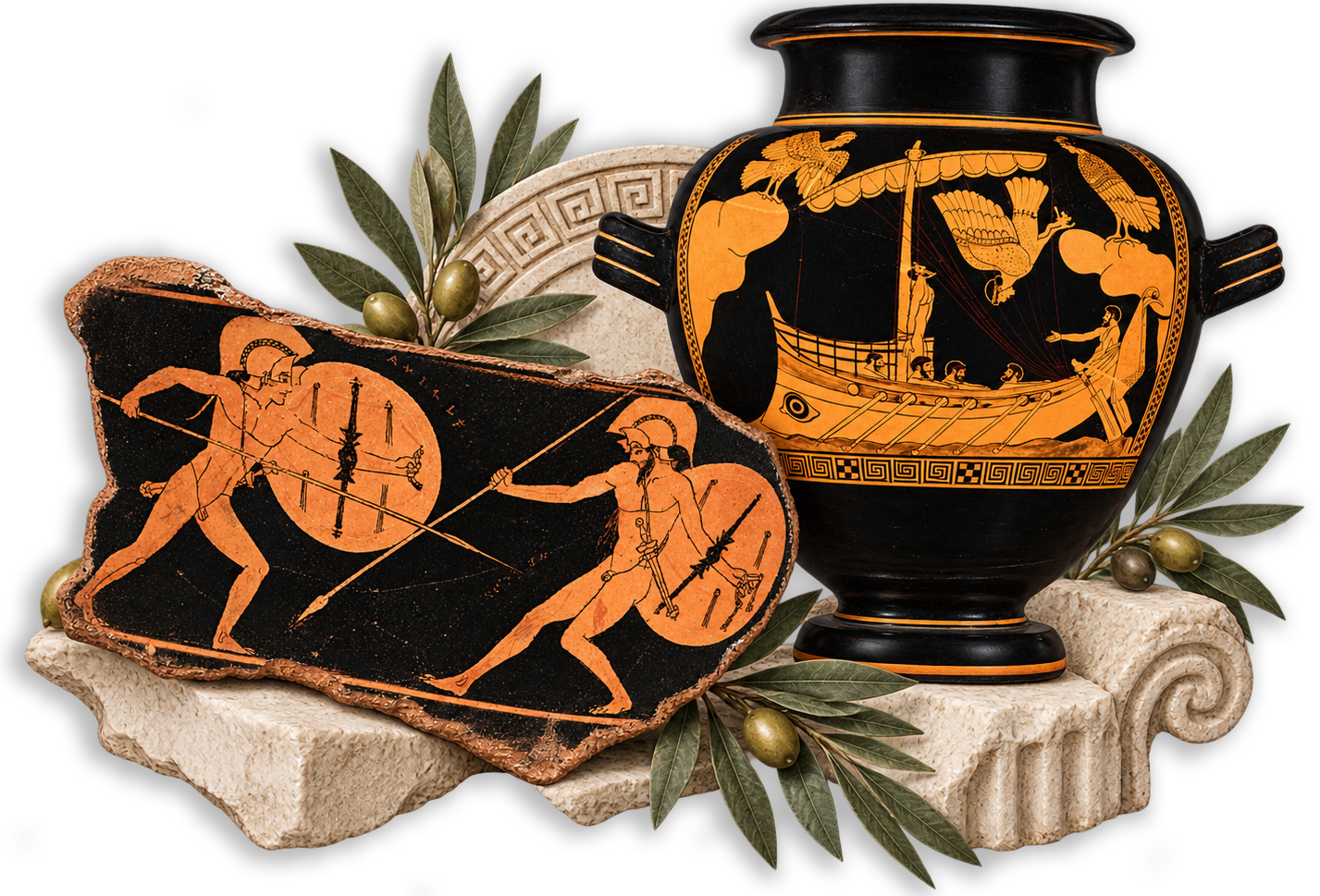
The course is enriched with rich audiovisual material, images of ancient Greek works of art, as well as later works of world art related to the Homeric epics, as well as a screening of ancient Greek tragedies inspired by the theme of the epics.